How to Successfully Get a Schengen Visa | Beyond the Checklist
Not another document checklist. Discover the 15 things that actually get Schengen visas approved and how consulates really evaluate your file, finances, itinerary & ties. Expert tips for first-timers & experienced travelers.

How to Successfully Get a Schengen Visa: Not a Checklist of Documents — A Guide to How Each Part of Your File Is Actually Read
Fifteen things that genuinely move the needle, from the desk that files these applications every day. Most Schengen guides just repeat a document checklist. This one is different — it’s how we actually evaluate a file before it goes in, based on what consistently gets approvals and what consistently invites queries.
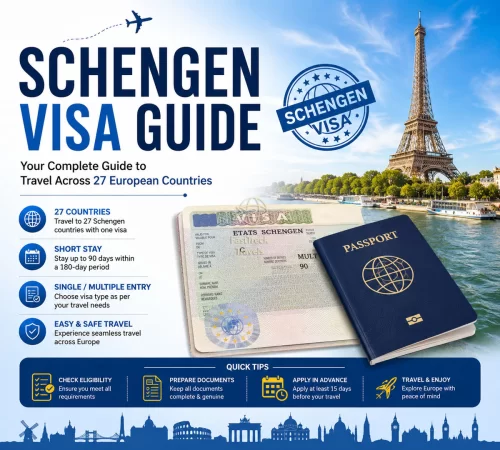
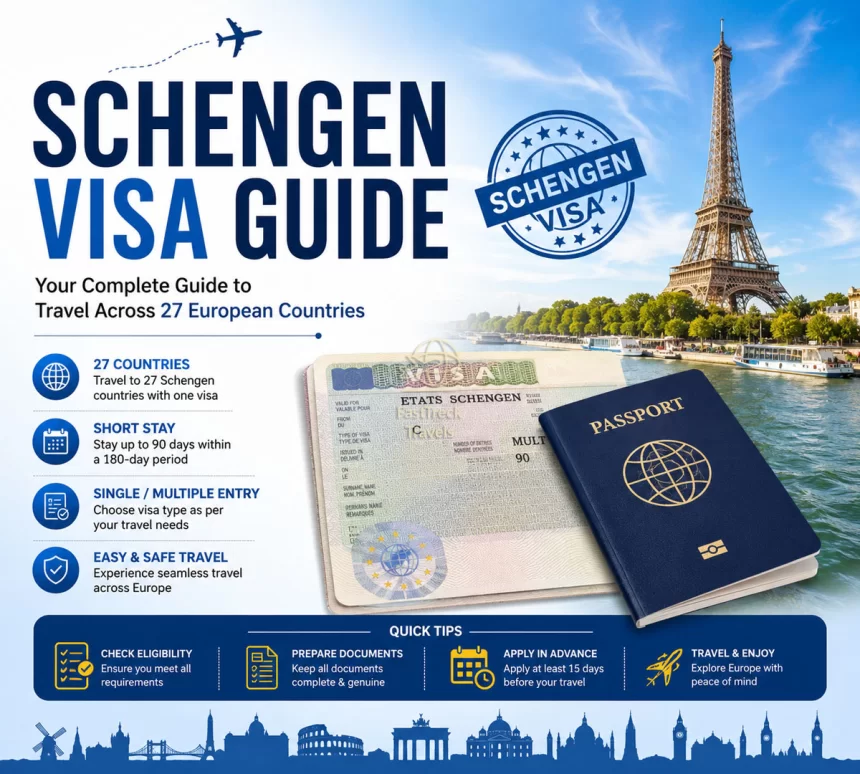
The Schengen visa (short-stay Type C, up to 90 days in any 180-day period across the 29 Schengen countries) is one of the most sought-after travel documents for Indian travelers and others from non-exempt countries. Approval rates vary by consulate and applicant profile, but the difference between a smooth approval and a refusal or query often comes down to one principle: verifiability and internal consistency.
Consular officers and outsourced visa centers do not simply tick boxes. They assess whether your story holds together — finances that match your lifestyle and itinerary, bookings that can be confirmed with a phone call or PNR check, employment and family ties that demonstrate strong reasons to return, and an overall file free of red flags. A modest, checkable application consistently outperforms an impressive one that cannot be confirmed.
This guide expands the practical lens used when reviewing Schengen files before submission. It incorporates the 15 high-impact factors that move the needle, plus essential context on process, common pitfalls, and supporting documents so your file is as strong as possible. For travellers who prefer expert guidance, partnering with experienced professionals such as the visa experts at FastTreck Travels can further streamline the process and significantly improve the chances of a successful outcome.
Understanding the Basics Before You Apply
Apply at the consulate (or VFS/BLS centre) of the country that is your main destination — the one where you will spend the most days. If stays are equal, apply to the country of first entry. You should also enter the Schengen area through that country when possible. Applying at a “convenient” or perceived easier consulate when it is not the main destination works against you.
Standard supporting documents typically include:
- Completed and signed Schengen visa application form (often online via the country’s portal or VIDEX-style system)
- Valid passport (issued within the last 10 years, valid at least 3 months beyond your planned exit from Schengen, with at least two blank pages)
- Recent passport-style photographs meeting ICAO/Schengen specs
- Travel medical insurance with minimum €30,000 coverage for medical emergencies, hospitalisation and repatriation, valid for the entire stay across all Schengen states
- Proof of accommodation, flight reservations (or itinerary), and sufficient means of subsistence
- Evidence of ties to your home country (employment, family, property, etc.)
- Cover letter explaining the purpose of travel
Processing times are usually 15 calendar days but can extend to 30 or 60 in complex cases. Apply well in advance (ideally 3–6 weeks or more, checking the specific consulate’s appointment availability). Fees are non-refundable even in case of refusal.
1. Aim for a Steady Monthly Credit, Not a Big Number
A steady monthly credit of around ₹1.5 lakh per person into your personal bank account reads well. A running balance of around ₹4 lakh per person is a comfortable benchmark for many tourist applications. What matters most is consistency over time — ideally 3–6 months of statements showing regular inflows that match your declared income — not a large sum that appears once and disappears.
Sudden large deposits just before applying raise questions. Officers look for patterns that demonstrate ongoing financial stability rather than temporary liquidity engineered for the application.
2. Your ITR Helps the Embassy Size Up Your Trip
An Income Tax Return in the range of ₹15 lakh (or higher, scaled to your lifestyle) is often viewed as a solid, average-to-comfortable profile for many applicants. The ITR is not mere paperwork; it helps the embassy estimate your genuine income, savings capacity, and whether the proposed trip is realistic relative to your means. A clear mismatch between declared income/ITR and an expensive multi-country itinerary is one of the factors that invites closer scrutiny or queries.
Submit recent ITRs (usually the last 2–3 years where relevant) along with salary slips or business income proofs.
3. Apply Through the Country Where You’ll Spend the Most Days
This is a hard rule under Schengen Visa Code. The competent consulate is the one of your main destination (longest stay or main purpose). Equal stays → country of first entry. Getting this wrong is a frequent cause of outright rejection or transfer complications. Plan your itinerary first, then choose the correct consulate and align your entry point accordingly.
4. Keep a First-Time Itinerary Simple
For first-time Schengen applicants, keep the trip modest: 8–10 days maximum, spread across no more than two or three countries. An ambitious first itinerary (long duration, many countries, complex internal travel) presents a bigger unknown when the consulate has no prior compliant travel history to evaluate you against. Once you have a clean Schengen or strong international track record, more complex trips become easier to support.
Provide a day-by-day outline that is realistic, with confirmed (or readily verifiable) transport and stays.
5. Travel History Matters — the Last 3 to 5 Years of It
Consulates review your international travel history over roughly the past 3–5 years. Previous visas (especially to visa-required destinations such as the US, UK, Canada, Australia, Japan, or prior Schengen stamps) and evidence of timely returns strengthen the file. It demonstrates a pattern of compliant travel. Include copies of previous visas and entry/exit stamps where relevant. Limited or no travel history is not fatal if other elements (finances, ties, itinerary) are strong, but it means the rest of the file carries more weight.
6. Make Sure Your Legal Record Is Clean
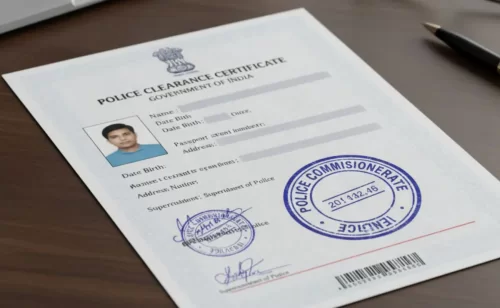
Confirm there are no open FIRs and that you are not an accused party in any sensitive ongoing court matters. Background checks are part of the process. Most applicants never verify this about themselves in advance — do so. Any adverse information that surfaces can derail an otherwise solid application.
7. Flight Bookings Need a Verifiable PNR
Your flight reservation must carry a valid PNR that the airline can confirm if the embassy or visa centre checks. Dummy or non-existent bookings that cannot be verified undermine the entire file. Prefer refundable or flexible tickets, or professional reservation services that provide real, checkable PNRs. Round-trip or onward travel that shows exit from Schengen is expected. Do not purchase non-refundable tickets until the visa is granted.
8. Hotel Bookings Need to Hold Up to a Phone Call Too
The same principle applies to accommodation. Confirmation numbers or references that the hotel (or Airbnb host, etc.) can verify are essential. Free-cancellation bookings are wise until approval. If staying with family or friends, a formal invitation letter plus the host’s ID/residence proof and contact details is required, and the connection must be documented (see point 12).
9. The Form and Cover Letter Both Need to Be Right
Complete the application form accurately and completely — even small errors or omissions signal carelessness. Dates, addresses, employment details, and travel purpose must match every other document in the file.
A well-written, personalised cover letter does real work. It should narrate your specific trip in your own words: purpose, itinerary highlights, why this destination(s), how you will fund it, and your clear intention and ability to return. It ties the documents together and addresses any potential questions proactively (e.g., bulk deposits, travelling with others, first-time status).
10. Employer Documents Need to Be Verifiable, Not Just Present
Employer NOC / leave letter and related employment proofs should be on original company letterhead, signed, stamped, and include the signatory’s name, designation, email, and contact number. A document that cannot be traced back to a real person at the company is far weaker. Include recent salary slips, employment contract if relevant, and proof of ongoing employment. Self-employed applicants should showcase credentials clearly (see points 13–14).
11. Explain Bulk Deposits — Don’t Let Them Speak for Themselves
Avoid large one-time bulk deposits in the months leading up to the application. If a genuine bulk deposit is unavoidable (sale of asset, gift, business inflow, etc.), address it directly and transparently in the cover letter with supporting evidence. Leaving the consulate to speculate is risky.
12. Travelling with Friends or Family? Document the Connection
If joining friends or relatives already in or travelling to the Schengen area, include their passport copy, visa copy (if applicable), and name them explicitly in your cover letter and itinerary. Provide invitation letters and relationship proof where relevant. This converts a vague claim into a documented, checkable fact.
13. Business Owners: A GST Certificate Is Often Enough
For business owners, a GST Certificate is generally sufficient to establish the business. Including the business ITR, business bank statements, and other operational proofs further strengthens the file and is considered good practice. Consistency between personal and business finances helps.
14. Self-Employed and Professionals: Lead with Your Credentials
Self-employed applicants should clearly showcase employment-related proofs (profession certificates, client letters, invoices, etc.). Working professionals benefit from including professional qualification or degree certificates. These help establish identity, occupation, and stability in the absence of a traditional employer letter.
15. Relationship Proofs Are Underrated
Marriage certificates, children’s birth certificates, and similar family documents are frequently omitted because applicants assume they are irrelevant. In practice they are useful — they help establish family ties and overall personal circumstances that feed into the assessment of intent to return and the coherence of the application as a whole.
Additional Factors That Strengthen (or Weaken) the File
Travel insurance must meet the minimum €30,000 medical + repatriation standard and cover the full period and all Schengen countries. Submit the policy certificate, not just a quote.
Proof of ties to home country is critical. Employment, ongoing business, family responsibilities, property ownership, education commitments, or other strong roots reduce the perceived risk of overstay. Weak or undocumented ties are a leading refusal reason alongside financial inconsistencies.
Consistency across the entire file is non-negotiable. Dates, names, addresses, employment details, and numbers must align everywhere — form, cover letter, bank statements, bookings, and supporting letters.
Honesty is essential. Misrepresentation or forged documents can lead to bans.
Common refusal reasons include insufficient or inconsistent finances, weak ties/return intent, incomplete or contradictory documentation, applying to the wrong consulate, unverifiable bookings, and insurance shortcomings. Understanding these helps you pre-empt them.
Putting It All Together: The Review Mindset
Before submission, review your file the way a visa officer or experienced agent would:
- Can every key claim be verified with a phone call, PNR check, or document cross-reference?
- Do finances, ITR, itinerary cost, and lifestyle align?
- Is the purpose clear and the itinerary realistic for a first-timer (if applicable)?
- Are ties to home country well documented?
- Is everything consistent and free of unexplained anomalies?
A clean, modest, fully verifiable file builds confidence. An over-ambitious or patched-together one invites questions.
This is the exact lens applied when reviewing a Schengen file before it is submitted — checking not just whether a document exists, but whether it would hold up if the embassy picked up the phone.
For many travellers, navigating these nuances alone can feel overwhelming. Engaging the specialised visa experts at FastTreck Travels can make a meaningful difference. Their team reviews applications with the same practical eye described here, helps structure a coherent and verifiable file, and guides applicants through the process to maximise the likelihood of a successful Schengen visa outcome.
Prepare thoroughly, be transparent, and align every element. When the pieces fit, the path to a successful Schengen visa becomes far more predictable. Safe travels — and may your European adventures begin with an approved visa stamp.
Disclaimer: Visa decisions rest solely with the consular authorities of the Schengen states. Requirements and practices can vary by country and change over time. Always consult the official website of the relevant embassy/consulate or authorised visa centre (VFS, BLS, etc.) for the most current checklist, appointment process, and fees applicable to your situation. This article is for informational and guidance purposes based on observed patterns and is not a guarantee of approval. Services offered by third-party visa consultants, including FastTreck Travels, are independent of official consular processes.