Uzbekistan 30-Day Visa-Free for Indians 2026 | Complete Travel Guide & 5-6 Night Itinerary
Uzbekistan announces 30-day visa-free entry for Indian citizens. Full travel guide with sample 5-6 night itinerary (Tashkent-Samarkand-Bukhara), weather, trains, flights, food & practical tips.

Uzbekistan Opens Its Doors: 30-Day Visa-Free Entry for Indians Unlocks the Silk Road
Uzbekistan has announced a 30-day visa-free regime for Indian citizens, a landmark step expected to significantly boost tourism, people-to-people ties, and business exchanges between the two countries. The announcement was made during Prime Minister Narendra Modi’s State Visit to Uzbekistan from 29–30 August 2026, at the invitation of President Shavkat Mirziyoyev.
Highlighting the strengthening bilateral relationship, President Mirziyoyev noted that trade between India and Uzbekistan exceeded USD 1 billion last year, while the number of joint ventures has grown sevenfold in recent years. The two nations are already linked by 14 direct flights every week. “The introduction of a 30-day visa-free regime for Indian citizens will make a significant contribution to the development of people-to-people contacts, tourism and business exchanges,” Mirziyoyev said. Combined with expanding air connectivity, this policy is set to make Uzbekistan far more accessible and appealing to Indian leisure and business travellers. Cultural connections are also deepening, with Indian cultural institutions playing an active role and yoga growing steadily in popularity across the country.
For Indian travellers, this is excellent news. The fabled cities of the Silk Road—Tashkent, Samarkand, and Bukhara—with their turquoise-tiled madrasas, grand mosques, lively bazaars, and warm hospitality are now within easier reach. Note that official implementation details and any conditions should be verified with the Uzbekistan Ministry of Foreign Affairs or the nearest embassy before travel, as formal decrees can refine eligibility.
Why Uzbekistan Appeals to Indian Travellers
Uzbekistan offers a compelling mix of living history, architectural splendour, and value. The country feels both familiar and exotic: the hospitality culture echoes Indian warmth, plov shares DNA with biryani and pulao, and the growing yoga scene creates a natural cultural bridge. Costs remain reasonable compared with many European or Southeast Asian destinations, and the classic triangle of Tashkent–Samarkand–Bukhara is perfectly suited to a 5–6 night trip.
Weather and Best Time to Visit
Uzbekistan has a continental climate—cold winters, hot summers, and low rainfall overall. The ideal seasons for most travellers are spring (April–May) and autumn (September–October). Daytime temperatures are pleasant (typically 15–25°C), nights are cooler, and the light is excellent for photography of the monuments.
Summer (June–August) brings intense heat, with daytime highs frequently reaching 35–40°C or more in the lowlands; sightseeing is best done early morning and late afternoon. Winters (December–February) are cold, with average January temperatures around or just above freezing in the main cities and occasional snow that can look magical on the ancient tiles, though outdoor exploration requires warm layers. Pack accordingly: layers for spring/autumn, sun protection and light clothing for summer, and proper winter gear if travelling then. Rain is limited, mostly falling in winter and spring.
Getting There: Flights from India
With 14 direct flights weekly, connectivity is already strong and improving. Direct options typically operate from Delhi (and sometimes other Indian cities) to Tashkent with Uzbekistan Airways and other carriers; flight time is roughly 3–3.5 hours. Connecting options via Dubai, Istanbul, or other hubs are also plentiful. Book early for better fares, especially around peak seasons. Upon arrival at Tashkent International Airport, ATMs are available, tourist SIMs (Beeline, Ucell, etc.) can be purchased easily, and Yandex Go or official taxis provide reliable transfers into the city (typically 20–40 minutes depending on traffic and destination).
Getting Around Inside Uzbekistan
The high-speed Afrosiyob train is the standout option for the main tourist corridor. It links Tashkent, Samarkand, and Bukhara comfortably and efficiently:
- Tashkent to Samarkand: approximately 2–2.5 hours
- Samarkand to Bukhara: approximately 1.5–2 hours
Trains are modern, air-conditioned, and offer Economy, Business, and VIP classes. Tickets should be booked in advance (especially in peak months) via the official Uzbekistan Railways site or app (passport required). Costs are modest—roughly the equivalent of a few thousand rupees depending on class and exact route.
Within cities, Yandex Go (the dominant ride-hailing app) is inexpensive and convenient. Tashkent has an impressive metro system whose stations are attractions in themselves. Shared taxis and local buses exist but are less practical for first-time visitors with luggage. Domestic flights are available for longer jumps (e.g., to Urgench for Khiva), but the train covers the classic itinerary perfectly. For maximum flexibility, private drivers or day tours can be arranged.
Currency tip: The local currency is the Uzbekistani soʻm (UZS). As of early September 2026, roughly 1 INR ≈ 124–125 UZS (rates fluctuate; check current figures). Cards are accepted in many hotels and larger restaurants in major cities, but cash remains essential for markets, smaller eateries, and taxis. ATMs are widely available in tourist areas.
Sample 5–6 Night Itinerary (Classic Silk Road Triangle)
This balanced itinerary covers the highlights without excessive rushing. Adjust based on flight timings.
Day 1: Arrival in Tashkent
Arrive, transfer to hotel, rest. In the afternoon/evening explore the modern centre: Amir Timur Square, Independence Square, and a stroll along Broadway. Sample first plov or shashlik. Overnight Tashkent.
Day 2: Tashkent Highlights
Morning: Hazrati Imam (Khast-Imam) Complex—see the beautiful mosques, madrasas, and the ancient Uthman Quran. Visit Chorsu Bazaar for spices, dried fruits, non (bread), and local life under its iconic dome. Ride the Tashkent Metro (stations such as Kosmonavtlar are artistic gems). Optional: Museum of Applied Arts or a short outing toward the Chimgan Mountains/Charvak if time and energy allow. Overnight Tashkent.
Day 3: Tashkent → Samarkand
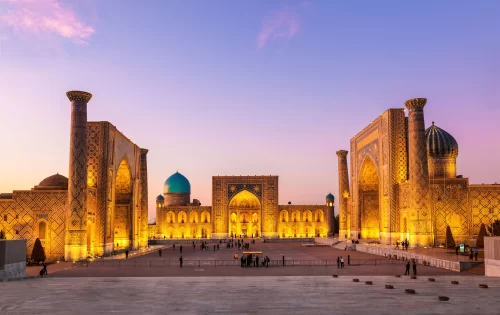
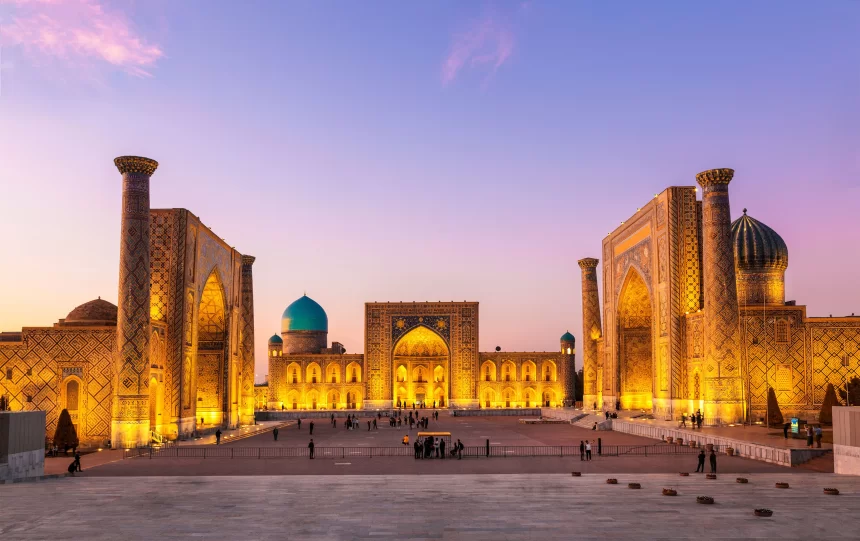
Morning Afrosiyob train to Samarkand (book seats in advance). Afternoon/evening: First look at Registan Square at golden hour—the three grand madrasas (Ulugh Beg, Tilla-Kari, Sher-Dor) form one of the world’s most spectacular ensembles. Overnight Samarkand.
Day 4: Full Day Samarkand
Registan again in softer morning light. Gur-e-Amir Mausoleum (Timur’s tomb, architectural inspiration for the Taj Mahal). Shah-i-Zinda necropolis (a stunning avenue of tiled mausoleums). Bibi-Khanym Mosque and nearby Siab Bazaar. Optional: Ulugh Beg Observatory. Enjoy local specialties and evening atmosphere around the old city. Overnight Samarkand.
Day 5: Samarkand → Bukhara
Morning train to Bukhara. Afternoon: Settle into the old town and explore the Lyabi-Hauz complex (peaceful square with pond, cafés, and traditional architecture). Evening stroll among the trading domes and minarets. Overnight Bukhara.
Day 6: Bukhara Deep Dive (or departure day)
Full exploration of the UNESCO-listed historic centre: Poi-Kalyan complex (Kalyan Minaret, mosque, and madrasas), Ark Fortress, Ismail Samani Mausoleum, Chor Minor, and the labyrinth of bazaars and caravanserais. Bukhara rewards slow wandering. Depending on flight schedules, overnight again or return to Tashkent by train for departure the next day. For a pure 5-night trip, compress Tashkent to one full day and adjust train timings.
Extension option: Add Khiva (Itchan Kala walled city) with an extra 1–2 nights via overnight train or flight from Bukhara/Tashkent—highly recommended if time allows.
Food, Culture & Practical Tips
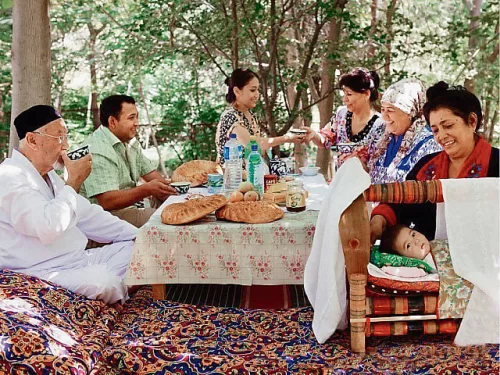
Must-try dishes: Plov (the national dish, UNESCO-recognised, with regional variations—Tashkent, Samarkand, and Bukhara each claim superiority), samsa (flaky baked pastry, often compared to samosa but typically oven-baked), shashlik (grilled skewers), lagman (hand-pulled noodles), manti (steamed dumplings), and fresh non bread with green tea in a chaikhana. Vegetarian options exist but are more limited; request clearly.
Cultural notes: Dress modestly when visiting religious sites (shoulders and knees covered; women may need a headscarf in some places). Photography is generally welcomed but ask permission with people. English is spoken in tourist areas and hotels; Russian and Uzbek are more common elsewhere—translation apps help. Uzbekistan is considered safe for tourists; standard precautions apply.
Other practicalities: Tourist SIMs are inexpensive and provide good data. Drink bottled water. Hotels range from budget guesthouses in old towns to comfortable mid-range and upscale properties. Many travellers report total trip costs (excluding international flights) for 5–6 nights in the range of mid-to-high tens of thousands of rupees per person depending on style—train travel and local food keep daily costs manageable.
Yoga enthusiasts will appreciate the growing practice in Uzbekistan, supported by a dedicated federation and cultural centres that strengthen India–Uzbekistan ties. Indian cultural institutions continue to foster exchanges.
Final Thoughts
With the new 30-day visa-free access, expanding flights, and the timeless allure of the Silk Road cities, Uzbekistan is poised to become a favourite for Indian travellers seeking history, architecture, culture, and value in one compact, rewarding trip. Whether you come for the turquoise domes of Registan, the atmospheric lanes of Bukhara, the plov, or simply the warmth of the people, the country delivers lasting memories.
Plan ahead for trains and peak-season hotels, verify the latest visa implementation details, and pack a sense of wonder. TheGlobalRoamer community—this is one destination worth crossing off your list soon. Safe travels, and may your first glimpse of the Registan under the Central Asian sun be as magical as travellers have described for centuries.